
Joni Mitchell’s U.S. Citizenship Marks a New Chapter in the Singer-Songwriter’s Long American Journey
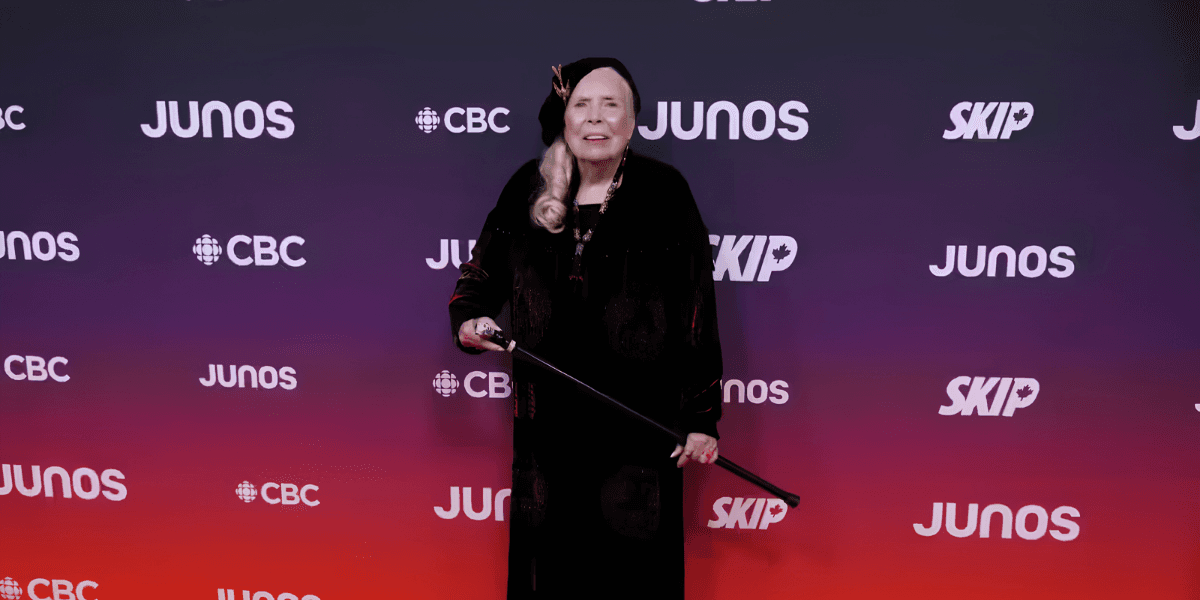
The Canadian-born music legend became a U.S. citizen after more than six decades of living and working in America.
A milestone in a celebrated career
Singer-songwriter Joni Mitchell's decision to become a United States citizen marked a personal milestone for an artist whose music and career have been closely associated with American cultural life for decades.
Mitchell, born in Canada, announced her naturalization in October through a social media post showing her with an American flag and footage from her citizenship ceremony. Her caption described the decision as a journey that began more than six decades earlier.
The announcement attracted attention because Mitchell has long been a major figure in North American music, with a career spanning folk, rock, jazz and other musical styles. Her work has influenced generations of songwriters and performers, while her distinctive songwriting and musical experimentation have remained central to her reputation.
The citizenship announcement also highlighted the difference between an artist's cultural identity, professional career and legal nationality.
From Canada to the American music scene
Mitchell was born in Alberta, Canada, and began building her career as a musician before establishing herself in the United States during the 1960s.
Her work became associated with the era's changing folk and rock scenes. Songs characterized by personal storytelling, unconventional chord structures and complex emotional themes helped distinguish her from many contemporary performers.
Over time, her music moved beyond the boundaries of folk songwriting. Albums such as Blue and Hejira became important reference points in discussions of songwriting and musical experimentation. Her work also drew on jazz influences and collaborations with musicians from different traditions.
Mitchell's career has continued to attract critical attention long after her early commercial breakthroughs. Her influence can be heard in the approaches of performers who combine intimate lyrics with complex arrangements or treat popular songwriting as a vehicle for artistic experimentation.
Why citizenship attracted attention
Mitchell's naturalization announcement was widely reported because of her prominence and her long association with the United States. She had lived and worked in the country for decades while retaining her Canadian citizenship.
The decision also had a practical consequence: U.S. citizenship provides eligibility to vote in federal elections, subject to applicable registration and voting requirements.
In subsequent comments reported by Canadian and American media, Mitchell said that voting was a motivation for becoming a citizen while emphasizing that she had not abandoned her Canadian citizenship.
Her remarks clarified that the decision did not require her to reject her Canadian identity. Instead, it represented an additional legal connection to the country where much of her professional life had unfolded.
The distinction resonated with audiences familiar with her long history across the Canada-U.S. border.
A legacy that crosses musical boundaries
Mitchell's importance to popular music rests on more than individual songs. Her writing has frequently explored relationships, memory, personal change and the tension between independence and belonging.
Her willingness to change musical direction also helped establish her as an artist difficult to confine to a single genre. Rather than repeatedly reproducing an early commercial formula, she pursued increasingly intricate arrangements and collaborations.
That creative independence has made her work relevant to musicians and listeners who value experimentation as well as lyrical detail.
Her influence is also reflected in the continued reinterpretation of her songs by other performers. Cover versions and tribute performances have introduced her compositions to audiences who may not have followed her original recordings.
A personal decision beyond public recognition
Naturalization is a personal process, and a celebrity's experience does not necessarily represent the circumstances of other applicants. Mitchell's public announcement, however, provided a rare glimpse into a major life decision by an artist whose career has unfolded across national borders.
For many performers, professional identity develops through touring, recording and collaboration in multiple countries. Citizenship, residency and cultural affiliation can therefore remain distinct aspects of a person's life.
Mitchell's announcement added a new detail to a career already defined by musical longevity and artistic independence. It did not change the origins of her work or erase her Canadian background.
Instead, it marked another chapter in the life of a songwriter whose career has long connected audiences across the United States and Canada.
Her music remains the central legacy, but the citizenship milestone offered fans another perspective on the personal history behind that enduring body of work.

Celeb Digest Contributor
Covers celebrity news, reporting on the people at the centre of the story.
This article features partner, contributor, or branded content from a third party. Members of the Celeb Digest editorial staff were not involved in the creation of this content. All views and opinions are those of the contributor alone.
Related Posts
Celebrity News·October 13, 2026

Trending·October 26, 2026