
Eugenia Kuzmina Brings Precision In Paris With DEVINCI Cars
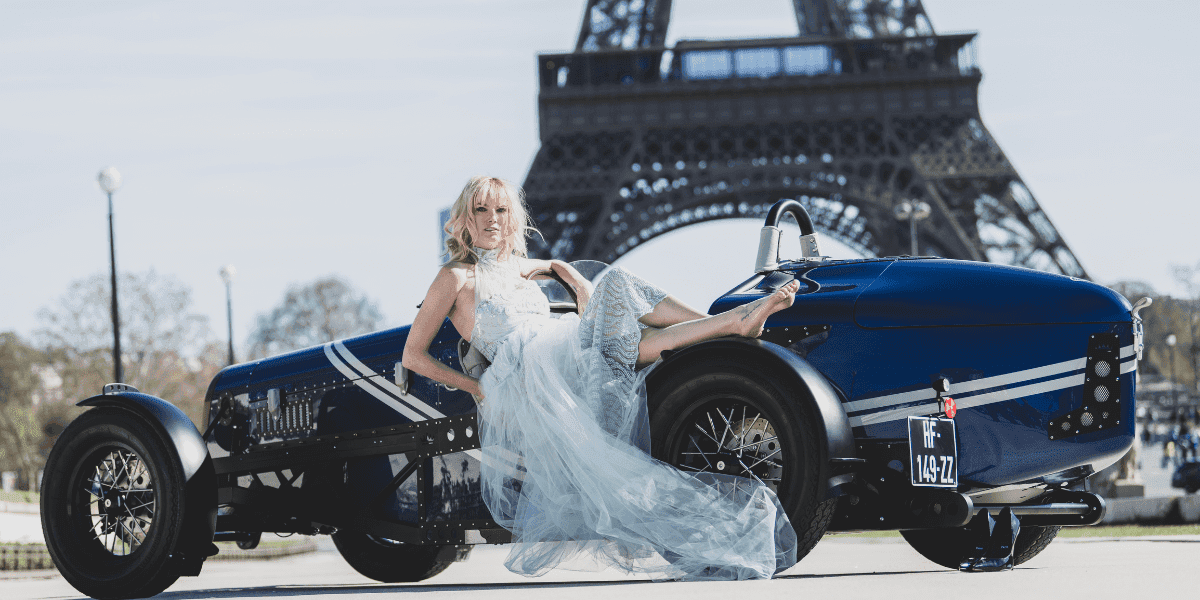
Eugenia Kuzmina and DEVINCI Cars converge in Paris to explore precision, emotion, and refined craftsmanship through performance and automotive design.
Paris rarely reveals its most meaningful moments in obvious ways. One late afternoon, the city carries its familiar rhythm of movement and light, yet something feels deliberately composed rather than incidental. A street near historic architecture becomes a stage without announcing itself. A passing car does not interrupt the scene but completes it. In this quiet tension between motion and stillness, a creative alignment begins to emerge between Eugenia Kuzmina and DEVINCI Cars.
The focus keyphrase DEVINCI Cars Eugenia Kuzmina Paris collaboration reflects more than a partnership. It signals a shared approach to experience, where emotion is shaped through restraint, and presence is defined by precision rather than volume.
DEVINCI Cars operates from a philosophy rooted in simplicity and intention. Designed and hand assembled in France, each vehicle is created not to dominate attention but to refine it. The experience inside a DEVINCI car is built around silence, smoothness, and clarity. Rather than overwhelming the senses, it invites a deeper awareness of movement and environment. Every detail is deliberate, shaping a sense of connection between driver and machine that feels personal rather than performative.
This approach challenges conventional ideas of luxury. Instead of focusing on visibility or excess, DEVINCI Cars emphasizes emotional alignment. The result is a driving experience that feels calm and considered, where technology and design serve a shared purpose of creating presence rather than spectacle.
[IMAGE: https://bizweekly.com/wp-content/uploads/2026/05/download-9.jpeg]
Her direction reflects a disciplined understanding of structure. Rather than restricting expression, she uses structure to reveal it. This approach mirrors the philosophy behind DEVINCI Cars, where engineering precision becomes the foundation for emotional experience rather than its limitation.
In the DEVINCI Cars Eugenia Kuzmina Paris collaboration, these philosophies intersect visually and conceptually. The imagery is striking but not exaggerated. A flowing silhouette moves alongside clean automotive lines. Stillness and motion share the same frame without competing for attention. The contrast is not designed to impress through intensity but to invite reflection through balance.
What makes this collaboration resonate is not its aesthetic alone but its underlying intention. Both Kuzmina and DEVINCI Cars operate with a shared belief that modern audiences are increasingly drawn to authenticity over spectacle. In a world saturated with noise, clarity becomes more powerful than volume.
There is a quiet discipline in how both creative languages are expressed. Kuzmina builds emotional structure through direction that allows performers to inhabit space naturally. DEVINCI shapes driving experiences that remove unnecessary distraction, allowing the driver to engage more fully with their surroundings. In both cases, refinement replaces excess.
This shared philosophy reflects a broader shift in how luxury is being redefined. It is no longer measured solely by appearance or status but by how deeply an experience resonates after it ends. The collaboration in Paris becomes a reflection of this evolution, where meaning is carried not in what is immediately seen but in what is felt afterward.
The collaboration between Eugenia Kuzmina and DEVINCI Cars suggests a future where creative disciplines increasingly overlap. Film, theater, and automotive design begin to share a common language centered on experience rather than display. In this space, precision becomes emotional, and emotion becomes structured.
[IMAGE: https://bizweekly.com/wp-content/uploads/2026/05/download-8.jpeg]
As industries continue to evolve, collaborations like this point toward a quieter form of innovation. One that values intention over excess and connection over performance. The DEVINCI Cars Eugenia Kuzmina Paris collaboration stands as an example of how creative alignment can shape perception without overwhelming it.
Ultimately, the message is not about spectacle. It is about presence. In both the car and the performance, the goal is the same. To create something that stays with the audience beyond the moment of encounter.
Explore DEVINCI Cars at https://devinci-cars.com or follow their journey on Instagram, Facebook and LinkedIn.
Check Eugenia Kuzmina’s official website and Instagram for more.

Celeb Digest Contributor
Covers fashion and what is trending, from the runway to the moments the internet will not let go of.
This article features partner, contributor, or branded content from a third party. Members of the Celeb Digest editorial staff were not involved in the creation of this content. All views and opinions are those of the contributor alone.
Related Posts

Trending·September 21, 2026

Trending·September 16, 2026